The amount of effort to get this to work must have been insane… it uses a video camera to watch the screen to decide what to hit on the guitar – crazy
Archive for: October, 2009
Make a bootable USB installer for Windows XP, Vista, 7
This is a HUGE time saver when installing… not only is it faster to install, but its easier to carry, and silent!
Making a bootable USB flash drive for Windows Vista and Windows 7 isn’t all that tricky, but it’s always nice to find an app that simplifies things. Not only does WinToFlash make the process about as easy as it can get, but it can also create Windows XP, Server 2003, and Server 2008 installers.
Make a bootable USB installer for Windows XP, Vista, 7 with WinToFlash

Comments are off for this post
Google Street View Guys
Apparently this is how Google Streetview is done:
Comments are off for this post
The truth about LED lighting
I’m glad someone did the research on this – I had a hunch but wasn’t sure… those new 4-watt LEDs run super hot!

Let’s start this off with a quick clarification. When I say “LED light”, I’m not talking about the nifty, little blinky things that are frequently part of the ingredients list in Make projects. I’m talking about the Big Show: An LED light that can replace the incandescent bulbs and/or CFLs you have lighting up your home right now. To do it right, you don’t just need a single LED that works, you need an array of them…and you need them to produce enough light, and the right color of light, reliably enough that people can buy an LED bulb and know what they’re getting into.That ain’t easy. But it is getting easier.
Trouble is, they’re being oversold, like whoa. For about two-and-a-half years, I’ve been reporting on LED lighting for a trade magazine called Architectural SSL*. During that time, I’ve watched mainstream press and enviro blogs tout LEDs as the green energy miracle light. Often, with a level of enthusiasm seldom seen outside rooms full of puppies. Don’t get me wrong. LEDs are pretty cool. There are places where they’re useful now, and places they probably will be soon. But if you’re just hearing about the awesome, you aren’t getting the full story. And, as more LED products start showing up on store shelves, that really starts to matter.
Comments are off for this post

Windows7 Party… torrenting?
Comments are off for this post
Converting to Digital Medical Records
I can’t believe that more that 80% of all medical facilities still use paper records… ouch
Comments are off for this post
Installing Windows 7 – hope this goes well

Posted by richardyoo on Natuba
Comments are off for this post
RAM Error rates are extremely high
Oh boy… RAID is dead, now this?!

A two-and-a-half year study of DRAM on 10s of thousands Google servers found DIMM error rates are hundreds to thousands of times higher than thought — a mean of 3,751 correctable errors per DIMM per year.
Comments are off for this post
RIP RAID – RAID is dead…
So what do we do now?!

The concept of parity-based RAID (levels 3, 5 and 6) is now pretty old in technological terms, and the technology’s limitations will become pretty clear in the not-too-distant future — and are probably obvious to some users already. In my opinion, RAID-6 is a reliability Band Aid for RAID-5, and going from one parity drive to two is simply delaying the inevitable.
The bottom line is this: Disk density has increased far more than performance and hard error rates haven’t changed much, creating much greater RAID rebuild times and a much higher risk of data loss. In short, it’s a scenario that will eventually require a solution, if not a whole new way of storing and protecting data.
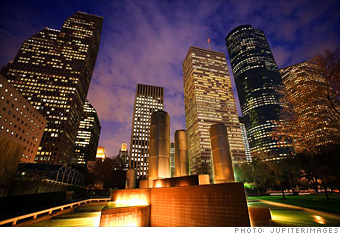
Houston #4 place to launch startups
Oddly, no cities in California…
This year we partnered with the Ewing Marion Kauffman Foundation to find the 50 most business-friendly communities in America. With help from Robert Fairlie, an economist and leading scholar of entrepreneurship at the University of California, Santa Cruz, we developed a methodology and sifted through data on factors such as per capita income, hourly wages, workforce quality, crime rates, taxes and foreclosures.
We also looked at population size. While some entrepreneurs prefer to locate near major cities, others opt for the intellectual spark and intimacy of college towns and other small, close-knit communities. One size doesn’t fit all, so our list is divided into three tiers: small, midsize and large metro areas.
Then we turned reporters loose on the top places. Over the course of several months, we spoke with hundreds of entrepreneurs and economic development officials about the pros and cons of metro areas throughout the U.S. Using those findings, we adjusted our rankings and picked this year’s winning places.


Jenifer Fox on strength building in children

Posted by richardyoo on Natuba
Comments are off for this post
David Eagleman – neuroscientist from Baylor Med

Posted by richardyoo on Natuba
Comments are off for this post
Pattie Maes from MIT Media Labs demo’ing SixthSense

Posted by richardyoo on Natuba
Comments are off for this post
Dan Ariely author of Predictably Irrational

Posted by richardyoo on Natuba
Comments are off for this post
Tomasz Tunguz – the man who told me about the 27-rule

Posted by richardyoo on Natuba
Comments are off for this post
Neil deGrasse Tyson of Nova Science Now

Posted by richardyoo on Natuba
Comments are off for this post

Robert “Aquanaut” Ballard – mapping the oceans – dare I say Jacques Custeau 2.0?

Posted by richardyoo on Natuba


David Plouffe former campaign manager for Obama

Posted by richardyoo on Natuba
Comments are off for this post